Stanford's Red Barn: A Legacy Forged in Speed and Innovation
Nestled amidst the sprawling campus of Stanford University stands a venerable structure that quietly witnessed the dawn of modern speed and motion analysis: the Stanford Red Barn. More than just an architectural marvel, this historic
Stock Farm Barn was the crucible where Leland Stanford's grand vision for equine excellence collided with groundbreaking scientific inquiry, forever altering our understanding of movement and paving the way for cinema itself. Its story is one of ambition, scientific curiosity, and enduring legacy, firmly establishing its place as a cornerstone of agricultural innovation and technological advancement.
The Grand Vision of the Palo Alto Stock Farm Barn
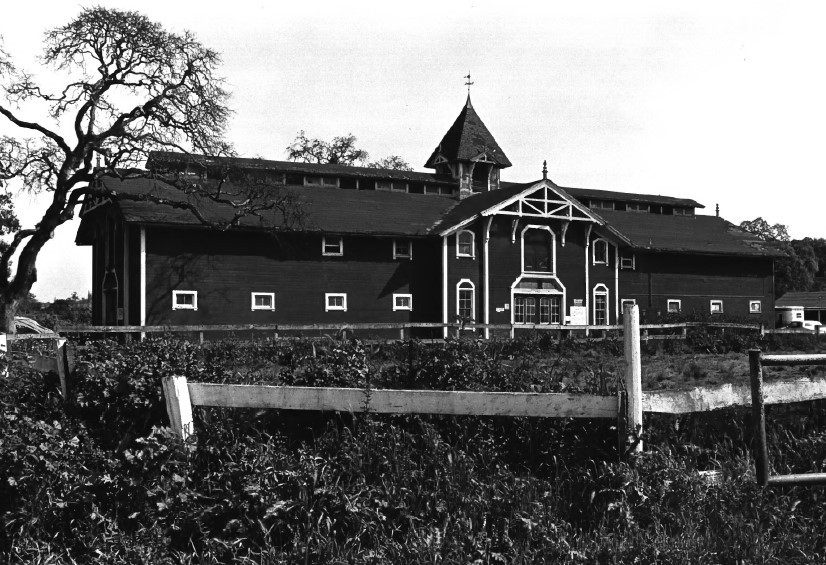
The tale of the Red Barn begins in the late 19th century, specifically between 1878 and 1880, when railroad magnate and former California Governor Leland Stanford embarked on an audacious project. On his vast 8,000-acre Palo Alto Stock Farm, he commissioned the construction of a magnificent Victorian-era structure, purpose-built to be the epicenter of a world-class trotting horse breeding and training operation. This impressive two-story, T-shaped redwood barn, adorned with distinctive Eastlake-style architectural elements like a prominent cupola and intricately carved finials, was designed to house hundreds of the finest racehorses.
Stanford’s ambition extended far beyond simply owning fast horses; he envisioned a scientific approach to improve equine speed and endurance through selective breeding. Drawing parallels from his experience in railroad expansion, where efficient horsepower was paramount, Stanford viewed horses as "biological machines" whose performance could be optimized for national productivity. He calculated that even a slight improvement in the average value of horses across the United States, achieved through scientific breeding, could yield billions in economic benefits. This perspective placed the Palo Alto
Stock Farm Barn at the forefront of agricultural innovation, aiming to surpass established Eastern U.S. breeding farms with a rigorous, data-driven approach. To truly appreciate the depth of his vision, delve into
Leland Stanford's Vision: Breeding the World's Fastest Horses.
At its zenith, the farm was a self-contained ecosystem dedicated to speed. It included a network of training tracks, a special "kindergarten" for young colts, and facilities specifically designed for short-distance speed drills. This massive operation employed approximately 150 workers and boarded up to 600 horses across the entire farm, all centered around the bustling activity of the main barn.
Breeding Champions: The Quest for Equine Speed
The meticulous breeding program at the Palo Alto Stock Farm yielded extraordinary results. Stanford’s scientific methodology, a blend of observation, record-keeping, and strategic pairing, produced a lineage of record-setting trotters. Notable among them was Electioneer, a legendary stallion whose influence was so profound that he is buried on the site. Other champions included Sunol and Arion, both contributing to the farm's impressive tally of thirteen horses that set world records.
This success wasn't merely due to superior facilities or brute force training; it was rooted in Stanford's belief that *science* could unlock unprecedented levels of performance. He meticulously tracked pedigrees, training regimens, and race outcomes, essentially laying the groundwork for modern sports analytics in the context of animal husbandry. The Red Barn, as the heart of this operation, was not just a stable; it was a research facility, a performance laboratory where the limits of equine potential were constantly pushed and redefined.
Capturing Motion: Muybridge's Pioneering Studies at the Stock Farm Barn
Perhaps the most revolutionary aspect of the Red Barn’s history lies not just in the horses it housed, but in the pioneering motion studies that took place there. In 1878, Leland Stanford commissioned English photographer Eadweard Muybridge for a groundbreaking project: to scientifically prove his hypothesis that a galloping horse lifts all four hooves off the ground simultaneously at a certain point. This seemingly simple question had long been debated, with artists often depicting horses in "flying gallop" poses that defied empirical evidence.
What transpired at the Palo Alto
Stock Farm Barn was nothing short of a scientific and artistic revolution. Muybridge, utilizing a series of cameras strategically placed along a track, developed an ingenious method of sequential photography. As a horse galloped past, it triggered tripwires connected to the cameras, capturing a rapid succession of images. These images, when viewed in quick succession, created the illusion of continuous motion.
The result was *Sallie Gardner at a Gallop*, a series of photographs that unequivocally proved Stanford's hypothesis and, more importantly, demonstrated a completely new way of seeing and understanding movement. This pivotal moment, occurring at the Red Barn, is widely recognized as a crucial precursor to the invention of cinematography. Muybridge's work not only settled a long-standing debate but also opened up entirely new fields of study in biomechanics and ushered in the era of moving pictures. It offered an unprecedented level of detail into the mechanics of animal locomotion, influencing artists, scientists, and inventors for decades to come. The very concept of "frames per second" had its genesis in these historic experiments conducted on Stanford's farm.
A Legacy Preserved: The Red Barn Today
Following Leland Stanford's death in 1893 and the eventual closure of the farm in 1903 to fund the newly established Stanford University, the magnificent
Stock Farm Barn fell into disuse. However, its historical significance was not forgotten. A testament to its enduring importance, the barn underwent significant restorations in the 1980s and again in 2004–2005. These efforts meticulously preserved approximately 70% of its original materials, ensuring that future generations could experience this piece of living history.
Today, the Red Barn stands as the Stanford Red Barn Equestrian Center, a vibrant hub that continues its connection to equine activities. It proudly supports the university's equestrian team, offering 27 stalls, modern arenas, and club facilities. It’s a powerful example of how a historical structure can adapt and thrive, maintaining its spirit while serving contemporary needs. For more on its journey from past to present, explore
Victorian Gem to Equestrian Hub: The Stanford Red Barn Story.
The barn's inscription on the National Register of Historic Places on February 19, 1985, acknowledges its profound role in both agricultural innovation and local history. It remains a rare and beautifully preserved example of a Victorian horse barn in the region, a physical link to a past where scientific curiosity and ambitious entrepreneurship converged to reshape our world.
Conclusion
The Stanford Red Barn, once the bustling heart of the Palo Alto Stock Farm, is far more than just an old stable. It is a monument to visionary thinking, a crucible where the pursuit of speed in equine performance intersected with the birth of motion photography. From breeding world-record trotters to hosting Eadweard Muybridge's pioneering studies that laid the groundwork for modern cinema, this venerable
Stock Farm Barn holds a unique place in history. Its enduring presence as a functioning equestrian center today ensures that its legacy of innovation, dedication to equine excellence, and profound impact on our understanding of speed and motion continues to inspire. The Red Barn serves as a powerful reminder of how a single structure can encapsulate immense historical significance and continue to contribute vibrantly to the present.